3Q26 Newsletter

Dear Valued Investors and Stakeholders,
Welcome to the 3Q26 IR Newsletter. This edition provides an update on key developments across SCBX Group since the 2Q26 Analyst Meeting, covering the macroeconomic outlook, business developments, technology milestones, and industry recognition during the quarter.
On the economic front, SCB EIC has revised Thailand’s GDP growth forecast upward to 2.2% for 2026 and 2.1% for 2027, supported by the global AI investment cycle, which continues to drive electronics exports and foreign direct investment in digital and technology-related industries. This is broadly consistent with recent economic developments, with official data showing continued strength in technology-related exports, while the broader recovery remains uneven. At its August meeting, the Monetary Policy Committee unanimously maintained the policy rate at 1.00%, noting that the economy continued to benefit from the technology and AI cycle, although growth remained low and uneven. Overall credit growth has improved, driven mainly by large corporate lending, while SME loans continue to contract and credit quality among SMEs and vulnerable households remains an area to monitor.
Against this backdrop, SCBX continued to advance its strategic priorities in wealth, and insurance. SCB launched SCB Gold Marketplace on SCB EASY in partnership with three leading gold traders, further strengthening the bank’s wealth platform and expanding access to gold investment aligned with global standards. SCB and FWD Life introduced Multi Asset 14/6 (Index Linked) and hosted the “Resilience Wealth: The Power of Diversification” seminar, reinforcing diversification as a core principle of wealth planning. InsureX announced its “Hire to Success” plan to increase the number of insurance advisors to 1,000 by the end of 2026, supporting its transition from insurance brokerage toward an advisory-led model.
On technology, SCBX launched “CORA”, an in-house AI analyst built to read and interpret complex Thai financial documents, with its core technology filed for patent – a concrete step in building proprietary AI capability. The Group’s progress was also recognized externally, with three awards at Money & Banking Awards 2026 and four awards at Techsauce Awards 2026, reflecting SCBX’s positioning as an AI-first organization.
We hope this newsletter provides a clear overview of SCBX’s recent progress. Thank you for your continued trust and support. A FAQ section is included at the end of this report to address key questions from investors and analysts.
Warm regards,
SCBX Investor Relations
SCB EIC – Outlook quarter 3/2026

SCB EIC has raised its forecast for Thailand’s GDP growth to 2.2% in 2026, from 2.0%, and 2.1% in 2027, from 1.9%. The upward revision is driven primarily by the global AI investment cycle, which continues to support electronics exports and foreign direct investment in digital and technology-related industries. Merchandise export value is expected to expand by 16.0% in 2026.
Nevertheless, the economic recovery has become increasingly uneven across business types, firm sizes, labor segments, and households. Growth remains concentrated in electronics and digital technology sectors linked to AI-related supply chains, particularly among large companies with greater access to capital, technology, and skilled workers. These sectors rely heavily on imported capital goods, raw materials, and intermediate goods, while their linkages with local firms and workers remain relatively limited. As a result, the benefits to domestic value added, employment, and income remain constrained. SMEs continue to face a slow recovery in revenue, pressure on profit margins and liquidity, and limited access to credit, while informal workers and low-income households are recovering more slowly.
Private consumption is expected to soften in the second half of 2026, reflecting the slow recovery in labor income, high household debt, and tighter credit conditions. The first THB 200 billion allocation under the THB 400 billion Emergency Decree is expected to help support economic activity and ease cost-of-living pressures during the remainder of the year. Spending under the second THB 200 billion allocation, which is related to energy transition projects, is expected to provide greater support to the economy in 2027.
On monetary policy, SCB EIC expects the Monetary Policy Committee to keep the policy rate at 1.00% through the end of 2027. Although the growth outlook has improved, the economy is expected to continue growing below its potential and the recovery remains uneven. Retail borrowers and SMEs also continue to face relatively tight credit conditions. Targeted financial measures, including debt restructuring and measures to improve SMEs’ access to credit, therefore remain important in supporting the recovery.
Key risks to monitor include further U.S. trade measures related to excess capacity and transshipment, the risk of a potential Super El Niño affecting agricultural output, and geopolitical tensions and volatility in global energy prices. Thailand also remains exposed to closer U.S. scrutiny following its classification as a Tier 2 country in relation to transshipment risk.
Read more: https://www.scbeic.com/en/detail/product/outlook-q32026
SCB Launches Gold Marketplace on SCB EASY
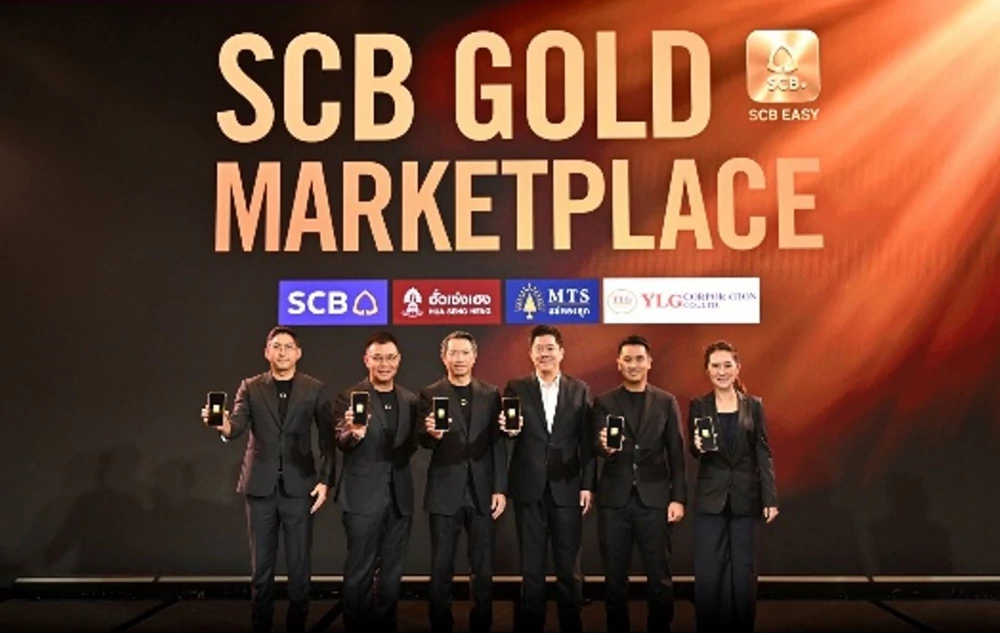
Siam Commercial Bank has partnered with three leading gold traders in Thailand, Hua Seng Heng, MTS Gold, and YLG, to launch SCB Gold Marketplace, bringing gold trading from all three dealers onto a single banking platform through SCB EASY. Customers can buy and sell gold in U.S. dollars through an SCB e-FCD account at prices linked to global gold markets, covering both 96.5% and 99.99% purity. The service has no transaction fees and requires a minimum investment of 0.05 baht-weight or 0.05 ounce. Customers may also withdraw physical gold at partner stores or have it delivered to their homes.
The launch expands SCB EASY’s investment capabilities in U.S. dollars, allowing customers to manage foreign exchange exposure, invest in offshore funds, and trade gold within a single application. This supports portfolio diversification amid market volatility and is consistent with the bank’s strategy to elevate SCB EASY from a transaction-focused application into a more comprehensive financial and investment platform.
Thailand ranks first in ASEAN and among the top 10 globally in gold trading, with peak trading value exceeding THB 250 billion per day, while SCB EASY has more than 17 million users. According to the bank, investor behavior is increasingly shifting beyond a focus on returns from price movements toward diversification, liquidity management, and wealth preservation, supporting SCB’s broader wealth management strategy.
Read more: https://www.scb.co.th/th/about-us/news/aug-2569/scb-gold-marketplace.html
SCB and FWD Life Launch Multi Asset 14/6 (Index Linked)
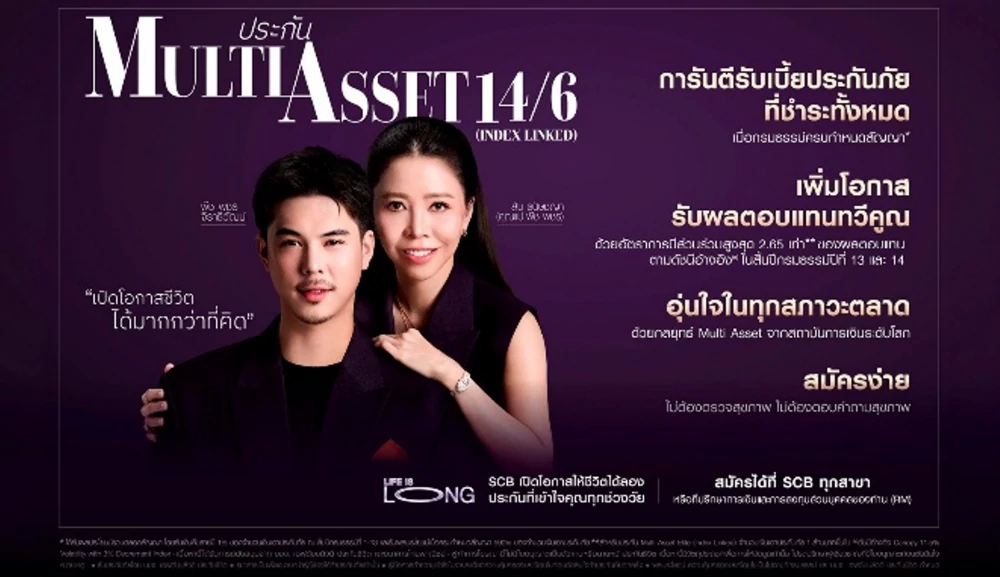
Siam Commercial Bank and FWD Life Assurance launched Multi Asset 14/6 (Index Linked), an endowment life insurance product that combines life protection with wealth accumulation. The product provides life coverage, guaranteed annual cash benefits in accordance with policy conditions, and the opportunity to receive additional returns linked to the Canopy 11.5% Volatility with 3% Decrement Index, which is sponsored and calculated by Goldman Sachs. The index follows a multi-asset strategy that adjusts allocations across asset classes based on economic growth and inflation signals. The product is positioned between traditional endowment insurance, which provides predetermined benefits, and unit-linked insurance, which offers investment opportunities with greater exposure to market volatility. According to SCB, increased market volatility and a low-interest rate environment have also increased investor focus on diversification.
To support the launch, SCB and FWD Life hosted the “Resilience Wealth: The Power of Diversification” seminar, covering the global economic and investment outlook, diversification across asset classes, and long-term wealth planning. The event brought together senior executives and investment professionals from SCB, FWD Life, SCB Asset Management, and Boston Consulting Group.
Read more: https://www.scb.co.th/th/about-us/news/sep-2569/fwd-scb-multi-asset.html
SCBX Launches CORA, an In-House AI Platform for Corporate Lending

SCBX launched “CORA” (Credit Optimization and Revolution with AI), an in-house AI platform designed to read, analyze, and answer questions from complex Thai-language documents, initially focusing on Form 56-1 annual reports. Developed for corporate lending, CORA uses generative AI to support risk assessment, financial statement analysis, credit memo preparation, and cash flow forecasting, with capabilities including source traceability, complex data handling, and multi-hop reasoning. The platform can reduce document analysis time from several hours to a matter of seconds under Responsible AI principles, while its core technology has been filed for patent protection.
Read more: https://www.scbx.com/en/news/cora-ai-analyst/
InsureX Targets 1,000 Insurance Advisors by End-2026

InsureX, a life and non-life insurance broker wholly owned by Siam Commercial Bank, plans to expand its team of insurance advisors to 1,000 by the end of 2026 under the “Hire to Success” concept, supporting its transition toward an advisory-led model that uses data and AI to provide more tailored customer advice. The expansion focuses on manager-led recruitment, attracting experienced sales and service professionals and banking employees seeking career transitions through the Skywalk Program, and offering a transparent compensation structure, flexible working arrangements, and a defined career path. Licensed brokers may receive compensation of up to 40%, subject to company conditions and individual performance.
Read more: https://www.scb.co.th/th/about-us/news/aug-2569/insure-x-hire-success.html
SCBX Group Receives Three Awards at Money & Banking Awards 2026
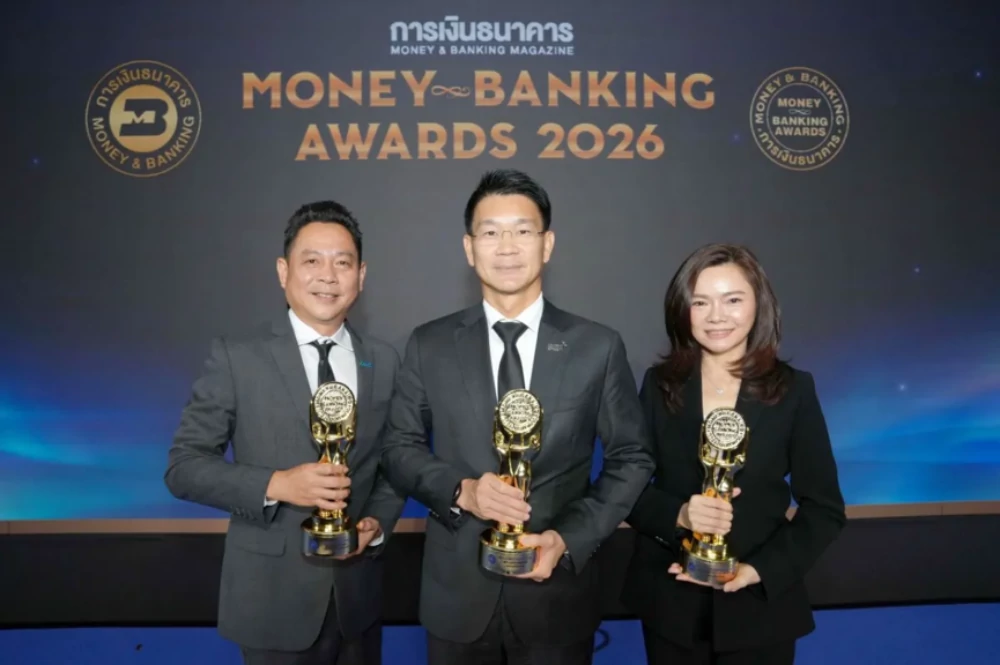
SCBX Group received three awards at the Money & Banking Awards 2026, reflecting the Group’s continued development across financial services and technology, as well as its ongoing efforts to enhance products and services. SCBX received the 2026 Company of the Year award in the Banking category, CardX received the 2026 Credit Card Company of the Year award, and SCB Asset Management (SCBAM) received the 2026 Fund of the Year award in the Commodity Fund category for SCB Gold THB Hedged Fund (Accumulation), or SCBGOLDH. The award ceremony was presided over by the Governor of the Bank of Thailand.
Read more: https://www.scbx.com/en/news/money-banking-awards-2026/
SCBX Group Wins Four Techsauce Awards 2026
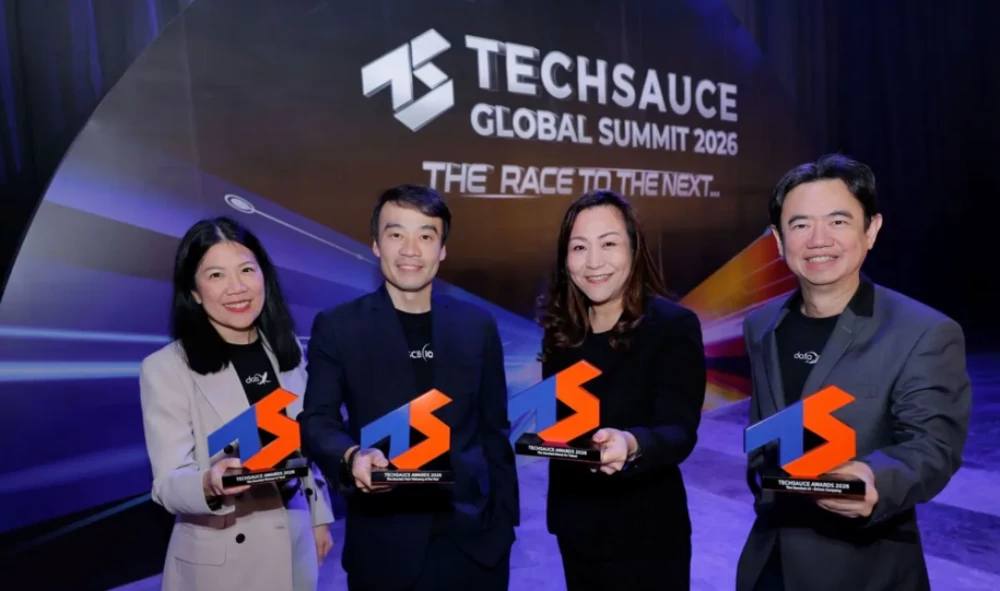
SCBX Group received four awards at Techsauce Awards 2026, reflecting its progress toward becoming an AI-First Organization. SCBX received The Sauciest Brand for Talent, while DataX received The Sauciest AI-Driven Company. SCBX’s Chief Innovation Officer and CEO of SCB 10X received The Sauciest Tech Visionary of the Year, and DataX’s Chief Data Officer received The Sauciest Woman in Tech. DataX was also recognized for applying AI in its operations, including ORCAA, an AI assistant on Microsoft Teams that has reduced employee query response time by more than 65%, and Pygmy, which supports timesheet recording with an on-time submission rate of more than 90%. DataX has also published 23 research papers, 14 of which were accepted at Tier 1 conferences.
Read more: https://www.scbx.com/en/news/techsauce-awards-2026/
FAQs
Q: What is the current situation at CardX?
A: CardX’s portfolio has stabilized, although profitability remains below the targeted level. Loan balances have stopped declining, with modest growth emerging in some areas.
Q: What is the current status of BankX and when is it expected to launch?
A: BankX remains in the setup and preparation phase, with the launch expected later this year or in early 2027.
Q: Do the elevated NPL sales and write-offs in 2Q26 indicate a deterioration in asset quality?
A: The higher level of NPL sales and write-offs primarily reflected the timing of portfolio management activities rather than a deterioration in underlying asset quality. NPL sales had been relatively low in preceding quarters, while disposal opportunities and loans reaching the appropriate stage for write-off coincided in 2Q26. Internal indicators, including early-stage delinquency, Stage 2 loans, and new NPL formation, did not indicate significant deterioration.
Q: Why did AutoX extend its write-off period, and how does this affect its NPL ratio?
A: AutoX extended its write-off period from 180 to 365 days to better align with the secured nature of its loan portfolio. As the loans are backed by collateral, recoveries can continue beyond 180 days. The extended period also provides more time to manage collateral recovery. As these loans remain on the balance sheet for longer, the reported NPL ratio will remain temporarily elevated.
Q: How does higher FDI translate into lending opportunities for SCBX?
A: Higher FDI does not necessarily translate proportionately into domestic bank lending, as foreign companies may obtain funding from parent companies or offshore financial institutions. There is also typically a lag between investment approval and actual funding requirements. Near-term opportunities are currently more visible in working capital, while broader demand for investment and project finance remains limited.
Q: What are the key drivers of volatility in FVTPL income?
A: Most of the volatility is market-linked and primarily reflects investment-related positions rather than customer-flow activities. As a result, FVTPL income can vary with market movements and the timing of investment gains.
Q: How sustainable is the current level of wealth management income?
A: The current level of wealth management income is supported by structural improvements in workflows, AI-assisted client identification and portfolio construction, higher RM productivity, and a shift from transaction-based selling toward an advisory and AUM-based model. Favorable market conditions have also provided additional support to income, which may moderate as market conditions normalize. Nevertheless, the underlying income base remains structurally higher than before the business transformation.